
The Meaning of Low-Intervention Winemaking
Walk the aisles of a chain supermarket and you get a quick education on how the American food complex works. There are brand names that we trust and have consumed since childhood – Rice Krispies, Heinz ketchup, Best Food mayonnaise – and each aisle is chock full of examples. These are products that come from companies that produce food items on a mass scale, large enough to fill demand nationwide in the world’s largest economy. They are also made from formulas, so that every time you purchase them, they taste exactly the same.
Most of these products have been engineered to hit the pleasure center of the brain. Fast food restaurants have been perfecting this craft for years. They engineer their food to contain what your brain craves, to make it irresistible – a perfect combination of fat, salt, sweetness, and flavor – which makes you go back for those fast food french fries time and time again.
“I met her in a club down in old Soho, where we drink Champagne and it tastes just like Coca Cola” – The Kinks
Not so with wine, or at least that is what I was raised to believe. My father taught me to know the nuances between not only between grape varieties, but also between, say, a Pinot Noir from Burgundy versus one from California. He taught me that wine was the only beverage that made a statement of place – it showed the character of the location where it was grown. And not only that, every vintage was different, too, due to weather conditions during the year.
From this perspective, wine is infinitely difficult to sell on a supermarket shelf. Yet there are countless brands that have become as mainstay in chain supermarkets as Hostess Twinkies. So what gives?
“Variety’s the spice of life, that gives it all its flavor” – William Cowper
What it boils down to is that there are winemaking tricks that can be used to make wine taste exactly the same year in and year out. (There is a reason why many winemakers in the business get winemaking degrees at accredited universities, so that they can learn all the tricks of the trade, just like fast food engineers). And what is in that bag of tricks? The US allows over 60 additives in wine, from benign ingredients such as tartaric acid (a natural acid already in grapes) to velcorin or mega purple, which are, um, not so good. And even worse? Manufacturers of alcoholic beverages are not required to list ingredients on their labels. I believe that this does a huge disservice to wine consumers.
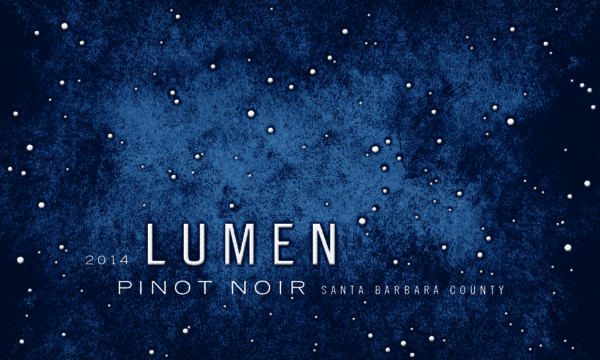
Low-intervention winemaking has become a buzzword with the smaller producers who do not make formula-based wines. What it means is that these wines contain little to no additives – and likely are far less likely to give you a headache. Lumen has followed low-intervention practices since the start, and now we have taken it to the next level – by controlling the farming practices to produce the gapes that go into our wines. We grow organic, and employ the same careful practices with our wines. We want you to know that the real deal is in your glass: healthy, chemical-free, and with a true statement of place.
-Will Henry
Here is a link to a great article about the most common additives in wine – check it out (and just so you know, we don’t use any of them, except for a low dose of sulfites prior to bottling).